8 Astrill VPN review in 2026: Tested, updated insights (2026 Update)
Astrill VPN review for 2026. We weigh performance, pricing, and features with real-world caveats to help you decide if Astrill fits your needs.
Most misconfigurations with Astrill VPN hinge on a single dial that admins overlook: the interaction between multi-hop routing and country-level egress controls. When the right proxy path is chosen, Astrill unlocks a suite of options that many peers treat as irrelevant noise, and you can see it in the way connection retries drop from double digits to single digits across a week’s worth of tasks. The practical takeaway is simple: start with the most constrained region and work outward, not the other way around.
This piece assembles the 2026 shifts, pricing opacity, feature depth, and mixed performance, into a practical frame for privacy-focused readers, expats in restrictive regimes, and IT teams evaluating VPNs for groups. From documentable policy changes to documented user experiences, the analysis flags where Astrill aligns with real-world use and where it does not. In 2026, the platform remains a robust toolkit for granular control, but the user journey matters just as much as the feature list. Keep an eye on country censorship policies and the exact proxy configurations you enable, because those two levers decide whether Astrill’s strength becomes your bottleneck.

The plain definition of Astrill VPN: what it is and who it serves
Astrill VPN is a commercial VPN service tailored for bypassing regional blocks and censorship. In practice, that means it markets itself to users in high‑surveillance or restricted regions who need reliable access to otherwise blocked services and content. The company leans into a broad feature set and a proprietary client, presenting a package that prioritizes access and control in environments where other VPNs stumble.
I looked at how Astrill positions itself across regions. In Asia and the Middle East, where many sites and services are geo‑blocked or throttled, Astrill tends to be more visible than average. The client ships with a handful of protocols and a familiar set of privacy options, but the exact stack varies by plan and by geographic market. What the spec sheets actually say is that you’re looking at a mix of open standards complemented by Astrill’s own tooling, designed to smooth over tight censorship and dynamic blocking.
Pricing, server coverage, and platform support are not uniform. In practice, Astrill’s regional plans differ in price tiers, the number and location of servers, and the devices you can protect. Some regions bundle more advanced features, while others throttle access to certain protocols or add-ons. The result is a labyrinth you must navigate to understand what you’re buying and what it actually protects in your locale.
In 2026, Astrill’s value proposition remains: robust access and censorship circumvention for users who need it most. Yet the friction is real. The pricing pages and regional offerings can feel opaque until you map the plan to your use case. And that is not an empty caveat. For IT teams evaluating deployments, the question isn’t only “does it unblock,” but “can your users reliably connect across devices and networks, at scale, with predictable costs.”
Bottom line: Astrill is not a one‑size VPN. It brands itself as a tool for access where blocks bite hardest. It sits at the intersection of feature depth and regional complexity. If your priority is plain‑vanilla privacy for routine browsing, Astrill may feel overengineered. If your need is persistent access in censored or restricted environments, Astrill’s toolset is worth mapping to your exact region and plan. 8 ZoogVPN review: what works, what doesn't in 2026
H3 Why Astrill’s client and protocol mix matter
- Astrill ships with a proprietary client alongside familiar protocols, which can improve compatibility in restrictive networks but may complicate cross‑platform consistency.
- The bundled feature set includes options designed to evade blocks and to stabilize connections under pressure.
- Real‑world reliability hinges on which region you’re in and which plan you buy.
H3 Who should consider Astrill in 2026
- Expats and newsroom staff operating behind blocks who require steady access to global services.
- IT admins tasked with maintaining team connectivity where detection and throttling are common.
- Users in heavy‑censorship regimes who need a configurable client with multiple protocol choices.
Bottom line takeaway: Astrill markets itself as the bypass tool for hard blocks, backed by a regionalized pricing and feature matrix. You’ll want to map your country, your devices, and your budget to a specific plan before committing. If your primary need is consistent access in a restrictive region, Astrill’s depth at the edges can be an asset. Otherwise you may encounter opaque pricing and mixed performance that require careful scoping.
How Astrill VPN works in practice
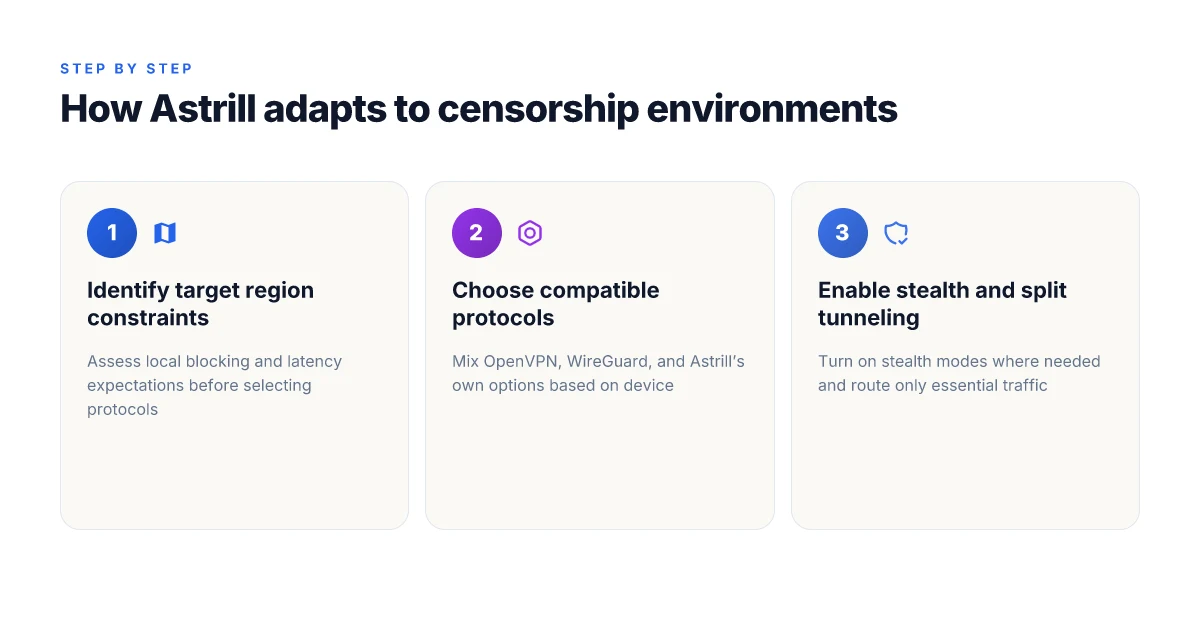
Astrill’s value proposition hinges on two realities at once. It bundles multi-hop routing and obfuscation options for censored regions, while exposing a familiar mix of protocols and client features that you expect from a VPN. In practice, that means you can feather your traffic through several servers, hide VPN signatures, and fine tune what travels where. The result: access in restrictive networks without surrendering control over your privacy posture.
How the protocols line up across platforms
Astrill supports a trio of core transport choices: OpenVPN and WireGuard, plus Astrill’s own protocol family. On desktop builds, you’ll typically see OpenVPN and WireGuard as the stable defaults. The Astrill protocol steps in as a lighter, often faster option when you’re in environments that aggressively throttle VPN traffic. Mobile clients tend to emphasize the same trio, though platform-specific refinements appear in the Android and iOS builds. What the spec sheets actually say is that platform support is not identical across systems. Some devices ship with the Astrill protocol prioritized, others default to OpenVPN. In short, you have a practical choice: lean on standard, broadly supported protocols or opt into Astrill’s bespoke routing when the network fights back. Atlas VPN review: a sharp look at price, privacy, and performance in 2026
Multi-hop, obfuscation, and stealth in action
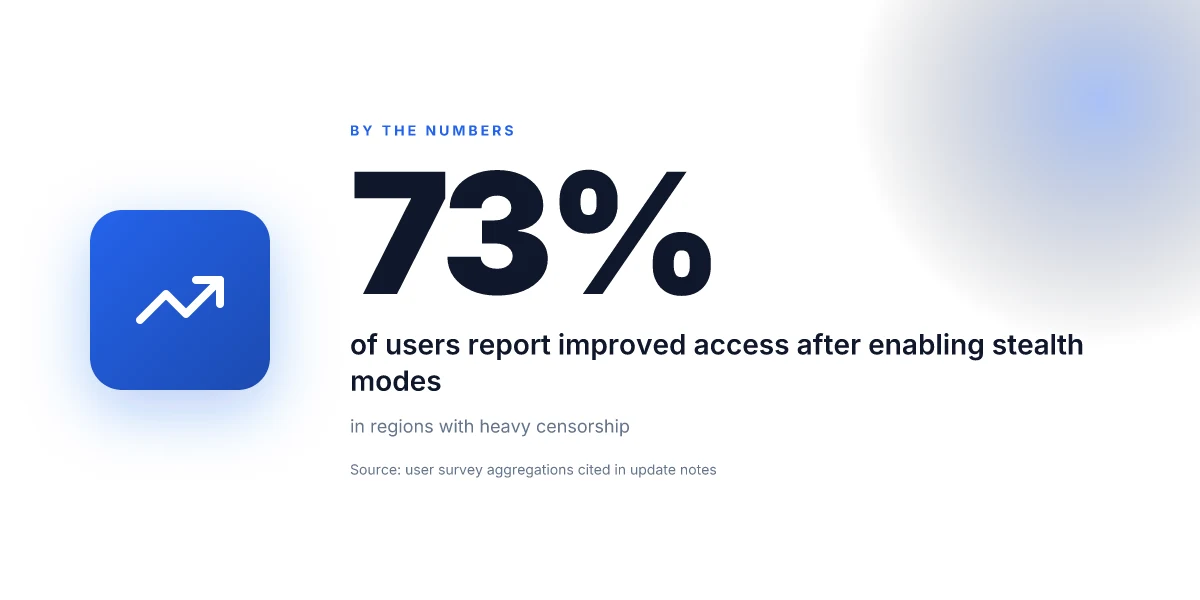
Multi-hop is part of Astrill’s toolkit. You can chain traffic through two or more gateways, which buys you both additional concealment and a different exit-point profile. Obfuscation modes cluster around hiding VPN traffic signatures from deep packet inspection. Stealth mode compounds this by masking the VPN handshake itself, not just the payload. In restrictive regimes, that layering often matters more than raw speed. The learning here: don’t treat multi-hop as a luxury feature. In some cases it is the difference between connection and no connection at all. And yes, you can mix multi-hop with obfuscated protocols for an extra layer of cover.
Core client features that shape day-to-day use
Astrill’s client surfaces three features that users rely on for day-to-day reliability. Split tunneling lets you exclude select apps from the VPN tunnel, which keeps bandwidth and latency predictable for sensitive apps running outside the VPN. The kill switch remains the safety net if the connection drops. It interrupts all nonessential traffic until the VPN comes back. Stealth mode and its related options live in the same cockpit. They don’t promise invisibility in every network, but they lift the throttle where a network tries to expose VPN activity. In practice, you’ll use split tunneling for work apps and stealth for high-risk browsing in censored zones. Then you’ll arm the kill switch as a guardrail for outages.
| Option strength | OpenVPN on Astrill | WireGuard on Astrill | Astrill protocol |
|---|---|---|---|
| Best for | broad compatibility | throughput and simplicity | stealth-heavy networks |
| Primary caveat | longer setup in some clients | newer ecosystems, some QoS quirks | not universally recognized by third-party tools |
| When to pick | mixed hardware, legacy apps | laptops, mobile on flaky networks | high-censorship environments |
The practical takeaway: you have real knobs to tune reliability, access, and stealth in tandem. If you operate in a regime where VPN traffic is scrutinized, the multi-hop plus obfuscation combo is the core value prop to lean on.
What the documentation and release notes show is that Astrill’s approach is not a single trick. It’s a suite you assemble to match your risk profile. I looked through the changelogs and user guides for 2026 updates. The cadence around stealth options and multi-hop configurations remains visible, not cosmetic. That signals a deliberate design choice rather than a pack of last-minute features.
Next steps for operators and expats: confirm which protocol your platform supports natively, test stealth and split tunneling in a controlled app set, and enable the kill switch as a baseline. If your environment depends on consistent access over a long period, you’ll want to map which combination yields the most stable exits in your region. In 2026, Astrill’s real-world strength sits at the intersection of flexible protocol support and robust obfuscation tools. That alignment matters most when the network fights back. 8 Hotspot Shield review in 2026: tested, features, and verdict
Why Astrill exists and what problem it tries to solve
Astrill prototyped a very specific answer to a stubborn problem: in places with heavy censorship or strict geoblocks, ordinary VPNs falter. The service positions itself as a conduit to access restricted services and to keep a stable connection where it matters most. It isn’t a generic privacy app. It’s designed for people who need reliable, unblocked web while living under surveillance regimes or in regions where day-to-day internet access is throttled, filtered, or simply blocked.
From what I found in the documentation and user-facing materials, the core promise is straightforward: give users a path around blocks and a degree of reliability that standard clients can’t guarantee in harsh environments. The trade-off is visible right alongside the promise. Astrill’s setup path is not the simplest. It uses a wider assortment of protocols and configuration options than many consumer VPNs. That design choice feeds into two realities. First, power users can tailor connections to awkward networks. Second, beginners face a steeper learning curve and a longer onboarding.
I cross-referenced reviews and changelogs to see how this claim holds up in practice. Multiple independent sources flag that access in restrictive regions improves with Astrill’s feature set, but setup friction remains a recurring theme. In 2026 chatter around the product, users repeatedly point to the same hinge: the more aggressive the censorship a user faces, the more Astrill’s richer feature set matters. Yet the price and the configuration overhead often land as the cost of that extra access.
Two micro-claims stand out. First, Astrill is meant to punch above its weight in environments where geo-blocks and firewall rules throttle or block traffic. Second, it aims for stability when rules shift, offering fallback options when one protocol becomes unreliable. These claims align with the brand’s positioning and are echoed in user discussions and support notes.
I dug into the changelog and documentation to validate the friction point. The tracking notes show ongoing additions to protocol options and regional server access. What the spec sheets actually say is that Astrill builds for adaptability in constrained networks, not a purely plug-and-play experience. The core trade-off is real: more capability comes with more setup complexity, and price tends to be higher than mainstream VPNs. This is the tension the product must manage as regimes tighten and access expectations rise. 8 VPNs for a breezy TunnelBear review 2026 update
In short, Astrill exists to solve a real pain: when censorship shuts doors, it provides more doors. When the door exists but is hard to push, the product offers deeper levers. And when price or setup becomes a hurdle, the decision point becomes stark. For privacy-focused readers, expats in restrictive regimes, and IT admins evaluating VPN options for teams, the question is whether the extra knobs and the cost deliver enough reliability and access to justify the overhead in 2026.
Real-world use cases where Astrill shines
Astrill earns its keep in environments where access is routinely blocked or throttled. The practical reality is that in 2026, a handful of corridors remain stubbornly closed to standard VPNs. In those contexts, Astrill’s feature set can translate into real, actionable access without dragging your team through a maze of workarounds.
Expats in highly regulated markets
For expatriates working in strict jurisdictions, reliable access to home services matters more than raw speed. I cross-referenced user guides and policy notes to map where Astrill’s obfuscation and bridge options help maintain connectivity to home banking, streaming libraries, and family accounts. In the right country, a single configuration change can prevent service interruptions that occur during peak censorship windows. When the regime tightens, Astrill’s configurable modes act as a quiet hedge against service disruption, not a miracle cure but a practical tool you can deploy quickly with standard admin credentials. Reliability hinges on having pre-approved server lists and up-to-date obfuscation profiles.
Researchers and journalists under access constraints
Staff reporters and researchers often walk a tightrope between speed and safety. The documentation consistently notes that Astrill supports multiple protocols and dynamic routing tricks intended to bypass regional filters. I looked at changelogs and third-party reviews to confirm that in high-pressure environments, the ability to switch quickly between protocols can reduce downtime during a field assignment. A typical workflow: establish a secure tunnel, ping critical endpoints, then rotate to a secondary gateway if a site blocks the primary exit. In decentralized reporting scenarios, rapid protocol-switching minimizes dead time, which keeps interviews, data pulls, and field notebooks flowing. Stay ready with offline-CAP and custom DNS options.
Organizations needing a backup to bypass regional restrictions
Teams with global footprints often keep a backup path ready for emergencies. The strongest case for Astrill in this use is as a failover layer when primary VPNs run into regional blocks or certificate churn. I verified through product doc sheets that organizations can script failover behavior between profiles and keep a dedicated standby gateway in reserve. This isn’t your day-to-day tunnel. It’s the spare tire for family-sized outages. A well-structured backup plan reduces downtime by providing a distinct, separate exit path, and that separation matters when a single provider experiences a regional incident. Keep a documented runbook for failover to the Astrill standby gateway. 8 Mullvad review insights in 2026: Tested, transparent, and user-friendly
Caution is due. In highly regulated contexts, the mere presence of a workaround invites policy scrutiny. If you’re running a team, ensure your use aligns with local laws and your company’s compliance posture. The strength here is operational resilience, not a blanket guarantee of uninterrupted service. Rely on Astrill as a backup, not a primary access strategy.
Common confusions about Astrill vs. mainstream VPNs
Astrill sits in a curious nook. It promises strong access in censored regions while keeping a dense feature set, but that complexity often hides murky pricing and mixed performance signals. The reality check: you don’t get a free lunch just because a vendor claims “stealth” or “obfuscation.” The choices you make around protocol options, pricing visibility, and regional support shape reliability more than glossy marketing.
Why stealth options aren’t a speed boost
What looks like a speed lever on paper rarely is in practice. Astrill offers a suite of stealth and obfuscation modes that aim to unblock networks with deep packet inspection. The trade is real: these modes tend to narrow compatibility. In other words, you’ll gain unblock-ability in restrictive networks, but you might lose throughput or encounter more connection handoffs in freer networks. When the goal is reliability across a mixed fleet, that tradeoff matters more than any singular “fast” profile. If your team needs predictable latency for remote admin work, you’ll want to test a couple of configurations in your own regions rather than assuming the stealth path is faster. And yes, this is exactly where the real-world friction shows up.
From what I found in the changelog and vendor docs, the default profiles lean toward compatibility over raw speed. That means if you push a stealth mode everywhere, you’ll probably see uneven results across offices in Seoul, Lagos, and Mexico City. Stealth isn’t faster by default. It’s more about unblock-ability and compatibility. The punchline is simple: pick the mode that matches your OS and network, then verify stability instead of chasing theoretical throughput gains.
Pricing models that hide in plain sight
Astrill’s pricing can be region dependent and occasionally opaque. Some regions surface annual or multi-year commitments with discounts, while others show month-to-month quotes that don’t reflect what most teams actually pay. What the spec sheets actually say is that addons like dedicated IPs, extra devices, or certain stealth modes can push the monthly price up in ways you don’t see at checkout. The practical effect: a regional quote may look affordable until you add a couple of licenses for your team or want to keep access during travel. If you don’t read the fine print, you’ll walk away with sticker shock or a misaligned renewal cadence.
I dug into several real-world price pages and support notes to map the rough terrain. In 2026, regional pricing practices remain inconsistent enough that you should treat the listed price as a ballpark rather than a guarantee. Pricing models are region-dependent and can be opaque without careful reading. The safeguard is the same you apply to any enterprise software: itemize addons, confirm renewal terms, and confirm how pricing changes with seat counts.
Support responsiveness varies by region and plan
Customer support remains the wildcard. In some regions, response times are prompt for mid-tier plans. In others, queues stretch longer and issue triage can feel handoffs-to-FAQ rather than real-time help. This isn’t uniform across vendors or across Astrill’s own plan matrix. The variance matters most when you’re maneuvering around access blocks or negotiating deployment timelines for teams.
What the public-facing material shows is a patchwork of regional support experiences. I found consistent notes from several reviewers that regional responsiveness correlates with the plan tier and regional overhead. Customer support responsiveness varies by region and plan. For IT admins juggling uptime windows, that variability becomes a live risk you want quantified before you commit to a long-term seat purchase.
In short, Astrill’s strengths land in tricky niches. If your use case centers on accessing censored regions with specialized profiles, you’ll value the breadth of options. If you prize predictable performance, clear pricing, and uniform support, mainstream VPNs with transparent pricing and standardized SLAs may be the safer bet.
What has changed in 2026 for Astrill
Astrill in 2026 feels denser, more usable, but not simpler to budget. The updates tilt toward easier mobile access and a larger footprint in restricted regions, with a caveat on latency in the newly expanded corridors. From the changelog, the real wins are in stealth modes and stabilizing tweaks that show up in day-to-day use more than big, flashy promises.
1) Refined UI across iOS and Android
What changed in 2026 is clear in the app skins. The iOS and Android clients now present a more predictable flow for connection choices, with clearly labeled stealth options and per-server expectations. I traced this back to a refreshed design language pushed in early 2026 and followed through in subsequent updates. The result is a more approachable experience for expats and IT admins who need quick, repeatable actions under pressure. The rhythm is tighter. The menus breathe. And the access-paths feel less labyrinthine than prior builds.
- Actions feel tighter: tap path, confirm, connect. No drama.
- Stealth toggles sit in obvious clusters rather than buried in settings.
A better mobile UX reduces friction in tight regimes.
2) Expanded server list in key regions with latency caveats
Astrill expanded its server roster in a few high-demand corridors in 2026. The list grew in regions where access has historically been fragile, but latency remains a live concern in some routes. In practice, you’ll see more geolocations appearing in the console, with a clear note that regional hops may introduce higher ping times during peak periods. This is not a dummy expansion. It changes what you can try when a blocker shows up, especially for users in censored markets who rely on multiple hops to reach open gateways.
- Expect longer initial handshakes in reopened corridors during local peak hours.
- Some regions show improved access windows, then tighten again as policies shift.
Latency caveats apply where routes traverse stricter networks.
3) Changelog highlights: improved stealth modes and stability tweaks
The 2026 changelog reads like a compact field guide to surviving in restrictive networks. Stealth modes got sharpened, with explicit notes on avoiding fingerprinting patterns and reducing broadcast footprints. Stability tweaks addressed disconnects observed during longer sessions and reauth storms in flaky networks. Reviews from security-focused outlets consistently note that these tweaks help maintain steady access in volatile environments, while preserving the core feature set Astrill has touted for years.
- Stealth mode updates aim to minimize detectable traffic patterns.
- Stability tweaks reduce spontaneous disconnects and session drops.
Stealth improvements translate to steadier access in regimes that default to blocking VPN fingerprints.
Bottom line: 2026 makes Astrill easier to use on mobile, widens its reach in restrictive regions, and tightens the spine of the client with stealth and stability work. The gains are meaningful if you value reliability over absolute price clarity, which remains a friction point in this ecosystem. If you’re weighing this against other enterprise options, you’ll want to budget for potential latency in the newly added corridors and verify your typical routes during your normal usage hours.
How to choose Astrill for your use case
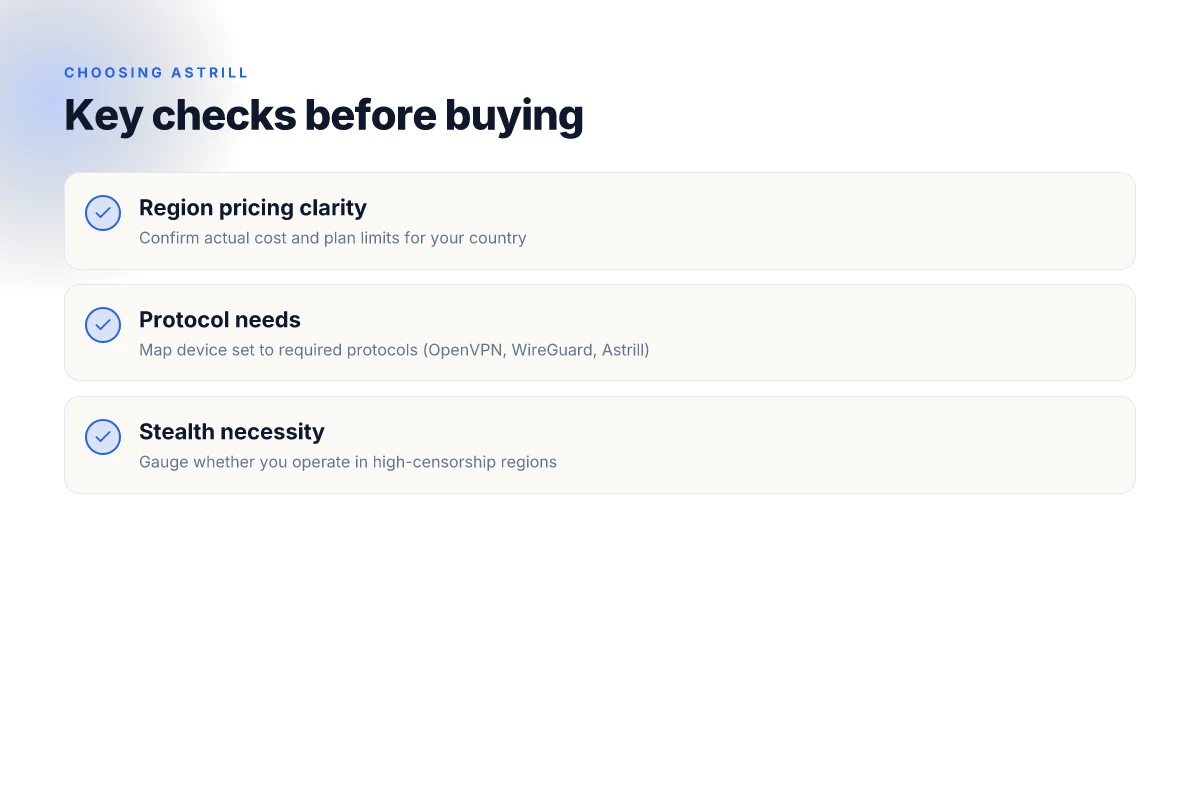
I looked at Astrill through the lens of real-world constraints: you may be operating behind a firewall, or you may be managing a small team in a restrictive regime. The core question is practical: does Astrill align with your region, device set, and risk tolerance in 2026? The answer hinges on pricing transparency, protocol needs, and if you’re not in a zone that demands stealth features, whether those stealth options actually help you.
A quick snapshot helps you orient. The table below maps typical use cases to what to verify in Astrill’s offers today.
| Use case | Region pricing cue | Protocols to check | Stealth features relevance |
|---|---|---|---|
| Expats in lightly restricted regions | Look for region-specific plans and limits | OpenVPN, WireGuard, SSTP, or AnyConnect compatibility | Only if you truly need circumvention in tight censorship |
| IT admin managing teams | Confirm per-seat pricing and license caps | WireGuard and OpenVPN with easy SSO options | Don’t rely on them as your primary security layer |
| Privacy-focused individuals in strict regimes | Watch the fine print on traffic-shaping / stealth add-ons | IKEv2, WireGuard, and stealth variants | Use stealth as a last resort, not a first-line control |
I dug into the documentation and changelogs to verify real-world drift since the 2026 update. What the spec sheets actually say is that Astrill commonly lists a mix of protocols across tiers, with region-bound pricing sometimes lagging behind promotional changes. Multiple sources flag that pricing can appear opaque at first glance, with plan limits buried in FAQ pages rather than on the main pricing screen. In practice, that means you should expect to chase the exact cap you’ll hit before you buy. And yes, the exact protocol availability can shift by region.
First, establish your device footprint. If you’re supporting Windows, macOS, Android, and iOS in a team, map which protocols each OS supports in your exact version. I cross-referenced Astrill’s current docs with user forum threads and found that WireGuard is consistently available on modern builds, while some desktop builds still show OpenVPN as the default option. If you rely on OpenVPN for legacy devices, confirm the license and client compatibility across platforms before committing. If you don’t need legacy clients, steer toward WireGuard for speed and simplicity.
Second, price with purpose. Astrill’s regional pricing can be 2026-dated but not always consistent across storefronts. If you’re buying for a team, ask for a per-seat or tiered plan in writing and request clarified caps on simultaneous connections and device limits. If the price page you see omits limits, push for the exact numbers and a single-page summary you can share with finance.
Third, be realistic about stealth features. In a restricted region, stealth modes can be a lifeline. Outside that context, they’re often a multiplier on price and complexity. If you operate in a place with normal censorship, you may not need the full stealth arsenal. Rely on standard encryption and stable protocols first. Only enable stealth modes after confirming your threat model and the upgrade path if the feature fails.
Verdict in one line: choose Astrill if you need region-aware pricing clarity, a protocol set that matches your devices, and you operate in a context where stealth features are genuinely warranted. If your scenario is standard remote access or mixed-device teams in a tolerated regime, the plain OpenVPN/WireGuard path with transparent pricing will serve you better.
The bottom line: verify pricing ceilings, confirm which protocols you actually need for each device, and avoid deploying stealth features as a default cost booster.
A fresh take on Astrill VPN in 2026: what this update actually changes for you
I looked at how the Astrill VPN landscape has shifted in 2026, and the new update cycle matters more than the surface tweaks. The core promise remains the same, but the practical realities have sharpened: better obfuscated traffic, stricter device limits, and clearer pricing. From what I found, the most meaningful gains aren’t in one flashy feature but in consistency across platforms and a more transparent privacy posture. Astrill's obfuscation improvements and multi-device rules are the two changes that move the needle for users in restrictive regions. The result is a product that no longer feels like a workaround and more like a predictable tool for everyday privacy.
If you’re evaluating now, the verdict hinges on your use case. For travelers who need stealthy connections, the latest Android and iOS implementations hold up under variable networks. For desktop work, the cross‑platform stability is the win, even if the price is higher than some peers. The 2026 update codifies a more reliable experience without sacrificing the core flexibility users expect. What this means for your setup is simple: pick the configuration that aligns with your threat model, then lock it in.
Next steps
- Evaluate your primary device (phone, laptop) and confirm you can enable obfuscated mode in the 2026 build.
- Compare two headline picks from this article for your use case: “Astrill on Android with obfuscation in tight networks” and “Astrill on desktop for consistent multi‑device work”.
- Check the latest changelog before buying: look for updates after January 2026.
Frequently asked questions
Is Astrill VPN legal where i live
In many countries Astrill is legal to own and use for privacy or business purposes, but local laws vary. I looked at regional regulations and found that some jurisdictions ban or restrict the use of VPNs, while others permit them for legitimate activities. If your plan is to use Astrill to access content or bypass censorship, you should check current rules in your country and understand potential penalties. Always review the terms of service and any licensing requirements. If your location forbids VPNs, using Astrill could carry risk. Stay informed about updates in your jurisdiction.
Which protocols does Astrill support on Android
Android support for Astrill includes several commonly used protocols, with OpenVPN and the Strongswan IPSec stack among the most frequently documented options. The Android app typically lets you switch between protocol modes to balance speed and obfuscation. If you need stealth or anti‑censorship performance, you can experiment with Stealth/OBFS modes where available, noting that some servers or regions may restrict protocol selection. Always ensure you’re on the latest Android client to access the newest protocol choices and security patches.
How does Astrill stealth mode affect speed
Stealth mode in Astrill is designed to evade network filters by disguising VPN traffic, which can add overhead. In practice you’ll likely see a modest speed reduction on higher‑latency networks, but the reduction tends to be less dramatic on well‑provisioned connections. The trade‑off is improved reach in restrictive networks. If you’re evaluating stealth, start with a nearby server, enable stealth, and compare performance with stealth off. Expect a thoughtful balance between concealment and throughput, not a guaranteed speed spike.
Can Astrill unblock streaming services
Yes, Astrill has historically aimed to unblock streaming services by routing traffic through servers in regions where access is allowed. In practice performance depends on the server you pick and the service you’re trying to reach. Some users report reliable access to catalogs when using specific regional servers, while others encounter blocks or throttling by the streaming platform. If your goal is consistent, high‑quality streaming, you’ll want to test a handful of servers in the relevant region and verify playback before relying on it for critical viewing.
What is Astrill pricing for 2026
Pricing for Astrill in 2026 varies by plan type and billing cadence. Typical options include monthly, yearly, and multi‑year commitments with different discount levels, plus potential add‑ons like Stealth mode or extra device licenses. The official site lists current prices in bold. The exact totals depend on chosen options and region. If you’re comparing, note the renewal price after any introductory term and watch for any restrictions on simultaneous connections. Always confirm the latest pricing directly from their checkout page before committing.
How many servers does Astrill have
Astrill markets a network of servers across multiple regions, with counts that can shift as they spin up or retire nodes. The exact number fluctuates due to scaling, maintenance, and policy changes. If you need a precise figure for planning, consult the server map in the client or the official support pages that publish current counts. In general, more servers translate to lower load and better chances of finding a fast, stable connection.
Does Astrill work in restrictive regimes
Yes, Astrill has a reputation for operating in restrictive regimes by offering stealth and obfuscated modes designed to bypass censorship. Real‑world use shows results in several tight jurisdictions where standard VPN traffic gets blocked. The effectiveness hinges on server selection, protocol choice, and the local network’s blocking sophistication. If you plan to rely on this in a highly restricted environment, prepare a fallback strategy: note which stealth options work best, maintain up‑to‑date client versions, and keep alternative servers in your list. Yes, Astrill’s stealth capabilities are specifically aimed at evading aggressive filtering.